Delaware Governor Jack Markell Signs Delaware Right-to-Carry Reform Bill!

February 23rd, 2010

News from http://www.nraila.org

NRA-ILA is happy to report that Governor Jack Markell (D) has signed House Bill 258 into law.

HB258 will extend the validity of a concealed carry permit from 2 years to 3 years for initial licenses and 3 years to 5 years for renewal licenses.

Thank you to all of the NRA members who answered the call to action in support of HB258. This victory would not have been possible without you.

Please contact Governor Markell and thank him for signing HB258. The Governor can be reached by phone at (302) 744-4101 or (302) 577-3210. To send email, please visit http://smu.governor.delaware.gov/cgi-bin/mail.php?contact.

First Delaware Crow Hunts of the Year

February 15th, 2010

My hunting partners and I typically celebrate the end of deer season by switching our game animals of choice to crows.

On Saturday morning, my daughters and I headed to my gun club with my Johnny Stewart Prey Master digital caller, my Greenhead Gear crow decoys, and their new Christmas 20-gauges. Our plans quickly changed because I couldn’t get my truck into the club driveways! For those of you who don’t know, Delaware has received nearly 4 feet of snow in the past 10 days. Unfortunately, the plow trucks created huge mounds of snow at all of the club entrances, so we couldn’t even enter. I had a shovel, but there was nowhere to pull off the road! We went to a nearby public hunting spot for about an hour, but for the first time ever, we saw no crows.

Later that day, my buddy Curt and I went to a new spot to hunt crows. Our hunting location selection was great. We had crows for 2 straight hours, and we knocked down a bunch. In fact, I ran out of shells with 30 minutes of hunting time left! Check out the photos and video below.

Hunting The First State Crow Hunt 1

Hunting The First State Crow Hunt 1

Hunting The First State Crow Hunt 2

Hunting The First State Crow Hunt 2

State of Delaware Seeks Feedback on Deer Management Plan

February 12th, 2010

From the Delaware DNR and Environmental Control

A draft version of Delaware’s Deer Management Plan is the first plan ever produced for formally addressing the future of a deer herd that has grown into a state success story of wildlife restoration.

Before the plan is officially completed, the Division of Fish & Wildlife is soliciting feedback  from anyone with interest in and concern about how deer are managed in Delaware. The new Delaware Deer Management Plan can be found at
http://www.fw.delaware.gov/Hunting/Pages/Delaware_Deer_Management_Plan.aspx

Comments can be submitted by mailing them to Deer Management Plan Comments, Delaware Division of Fish & Wildlife, 6180 Hay Point Landing Road, Smyrna, DE 19977 or by emailing to Joseph.Rogerson@state.de.us .

Comments will also be accepted at three public meetings the Division will host in February, one in each of the state’s three counties. The dates and times include New Castle County – Feb. 18, 7-9 p.m., Ommelanden Hunter Education Center, 1205 River Road, New Castle, DE 19720;  Kent County – Feb. 16, 7-9 p.m., DNREC Auditorium, Richardson & Robbins Building. 89 Kings Hwy,  Dover, DE 19901; and in Sussex County – Feb. 17, 7-9 p.m., Delaware Tech Owens Campus, Seashore Hwy (Rte. 18), Georgetown, DE 19947

Written comments and suggestions will be accepted until the close of business on April 1. The finalized Delaware Deer Management Plan is expected to be available for review in May or June.

For more information about the Delaware deer management plan, or anything else related to white-tailed deer in the state, please contact Joe Rogerson, Fish and Wildlife Deer and Furbearer biologist, at (302) 735-3600.

Hunting in Delaware: Stay one step ahead of weather

February 6th, 2010

Editor’s Note: Here is a repost of my most recent article for The News Journal. I have inserted some comments, as well.

Sitting in a deer stand for the better part of six hours during last Saturday’s snowstorm and single-digit wind chills gave me ample time to ponder and appreciate proper cold weather hunting preparation.

I circled the last day of the deer hunting season on my calendar back in September, so I knew I would hunt regardless of the weather. When I realized late last week that the Saturday forecast predicted highs in the teens, gusty winds, and a slight chance of snow, I planned accordingly.

I was happy I did.

Mother Nature quickly overruled the slight chance of snow and dropped nearly 5 inches of the coldest, most powdery snow I’ve ever seen. To make matters worse, she supplied just enough wind to blow the light, tiny flakes into every wrinkle of my clothing and onto every centimeter of my exposed skin.

My preparation (or my lunacy, as some would say) enabled me to stick it out.

Preparing to hunt in cold weather begins with basic common sense: Be aware of the forecast prior to beginning your hunt. With televison, radio, and the Internet, there is no excuse for not having an up-to-date weather forecast. Be careful, however. As proven last week, it is not merely enough to play the odds. Last Saturday’s snowstorm was supposed to pass to the south of New Castle County, but the small chance of snow prompted me to pack my rain/snow gear in my hunting pack. The preparation paid huge dividends since it snowed steadily the entire time I was in the woods.

When the forecast calls for extreme cold, appropriate dress can be the difference between an enjoyable hunt and a hunt that ends miserably, and more seriously, the difference between life and death. Dress in layers, but be smart about your layering. Start with an insulating undergarment layer (top and bottom) of polypropylene or some other fabric that traps heat and wicks away moisture. (I like military issue polypropylene pants and shirt or Under Armour.) Next add one or two layers of mid-layer garments. On extreme cold weather days, I wear a thick, tight-knit wool shirt covered by an even thicker wool vest (both made by King of the Mountain), and thick wool pants. For an outer layer, I recommend a heavy, hooded, wind- and water-resistant parka or a full-body jumpsuit and a wool hat. When the forecast calls for precipitation and/or wind, I will add an outer shell lining of a waterproof jacket and pants. (I am especially fond of Frogg Toggs).

Keep in mind that some of us perspire more than others, and simple walks to a hunting location while wearing multiple layers of clothing can cause sweating. If you anticipate becoming overheated while walking, don’t put your outer layer on until you reach your location.

Nothing can end a cold-weather hunt faster than numb fingers and toes. Cost-cutting measures can be applied to all of your other hunting clothing purchases, but do not skimp on gloves, socks and boots. For gloves, I recommend a pair of wool glove liners covered by water-resistant mittens with flip-open fingers. For footwear, wear heavy-duty, moisture-wicking socks with a quality pair of low-temperature rated, waterproof boots that provide a thermal barrier without sacrificing comfort. Gone are the days of bulky, heavy boots that hinder movement and cause blisters. New technology is making it easier and more comfortable for us to hunt for longer periods in the cold. In fact, for extreme cold weather hunting, I wear boots that incorporate 2000 grams of Thinsulate material and Aerogel, a nanotechnology material developed for NASA that provides an extremely effective insulator with the lowest thermal conductivity of any solid material known to man. How cool, er hot, is that? (I have had several inquiries about the boots I wear. I wear Irish Setter Snow Claw XT extreme cold boots.)

Above all else, be smart when hunting in cold weather. If you are cold standing or sitting still, move around a bit. If you get too warm, remove a layer of clothing. And if you start to shiver uncontrollably, end your hunt and move to a heated location.

Hunting in Delaware: There’s still time to even the score

January 26th, 2010

Steven M. Kendus article from The News Journal, January 21, 2009

I can already feel the dreaded emptiness that undoubtedly follows my final trips to the fields, marshes and woods as another hunting season comes to a close. I begin to replay a season’s worth of hunts in my mind, somehow hoping to relive them, extend them, or in some cases, even alter them.

I begin to clean and store my gear, address chores that I artfully managed to ignore since September, and allow my thoughts to drift to future seasons, future hunts, new places and new equipment.

However, like the stabbing pain brought about by an abrupt end to the Eagles season, I’m jolted back to reality and realize that there are still a few weeks of hunting left. In fact (sticking with our football analogy), I consider the next several weeks the last minutes of the fourth quarter. What’s more, I now look at late February, March and the beginning of April as overtime.

As a deer hunter who has not fared very well this season, I have several more chances to even the score. If I stick to bowhunting, I can hunt deer through Jan. 30. If I opt to pursue whitetails with a gun, the January shotgun season runs through Saturday, and the January muzzleloader seasons is open Jan. 25 through Jan. 30.

Waterfowl hunting also presents some last-minute opportunities to harvest game. Duck and regular snow goose seasons are open through Jan. 30, and Canada goose season is open through Jan. 26.

Squirrel, quail and pheasant seasons are open through Feb. 6, and DNREC Division of Fish and Wildlife recently announced an extension to the Delaware rabbit hunting season. This new regulation establishes the end of Delaware’s rabbit season each year as the last day of February (or the last Saturday of February if the month ends on a Sunday). This “overtime” season allows hunters to pursue rabbits during periods unaffected by deer hunters.

For extended overtime hunting, the snow goose federal conservation order enables hunters to pursue snow geese from Feb. 1 through April 17, with no bag or possession limits. What a great way to wrap up the season.

Like every year before, I know that this hunting season will inevitably come to a close. Rather than quitting prematurely, I will play until the clock runs out.

HTFS Reader Submission: Unique Delaware Buck

January 22nd, 2010

Check out this buck that Jimmy Brown harvested during the nor’easter on opening day of Delaware’s November shotgun season! His account is pasted below.

Delaware Buck Taken By Jimmy Brown

Delaware Buck Taken By Jimmy Brown

I was out there on opening day and I agree with you it was a nasty nor’easter. I tried to get to my ground blind about 75 yards in the woods near a stream, but was unable to because the water was over knee high.  So I then went to an open box stand on the field which no one was hunting. About 6:30 I looked behind me and there was a big buck with two does about 150 yards out in the middle of the field. As I got setup on him the does decided to run and the buck chased them into the woods. Half hour later the same buck chased those two does back out into the field about 100 yards when I took the shot. Unofficial score around 130 5×3 with 6″ bases inside spread of 19″ brow tines 9 1/2″ not my biggest deer but very proud of this one.

Delaware Rabbit Hunting Season Extended

January 12th, 2010

The Delaware Division of Fish and Wildlife announced a regulation to extend Delaware’s rabbit hunting season, effective January 11.

This change extends the rabbit hunting season each year to the last day of February or the
last Saturday of February, if the last day of the month falls on a Sunday.

After careful review of biological data, the Division concluded that the season extension would not have an adverse effect on the state’s overall rabbit population.

For additional information, see the Delaware Division of Fish & Wildlife site.

The Decade’s 10 (or more) best Advances in Hunting Technology

January 9th, 2010

Author’s Note: Here is a ‘blogified’ version of the hunting article I wrote for The News Journal on January 7, 2010.

The decade of the 2000s brought about significant innovations in hunting-related technology and products.

While intriguing advances were made in just about all areas of hunting last decade, I (with some input from the online hunting community) managed to narrow the list down to  the top ten innovations that enabled us to hunt safer, improve our chances of harvesting game, enhance the quality of our hunts, and protect the environment.

10 – Improved, Easier-to-Use Muzzleloaders – Recent designs in inline muzzleloading technology give hunters an easier, more modern approach to muzzleloading. Simpler ignition systems, pre-measured powder pellets, modern bullets, and cleaner burning powders have led to improved performance and accuracy, decreased loading and reloading times, and less barrel fouling.

I have been using a .50 Cal. Magnum Thompson/Center Encore for about 5 years, and I absolutely love it. In fact, I would rather use my muzzleloader than a shotgun. According to the T/C web site, “using T/C’s Mag Express Sabots and a 250 grain Shockwave™ bullet with 3 Pyrodex Pellets, it produces a muzzle velocity of 2203 ft./second and it is lethal out to 200 yards!”

9 – Adjustable Full-Body Safety Harnesses – While full-body safety harnesses have been securing window washers, loggers, and similar workers for years, they have only recently been adopted by the hunting community. Newer, adjustable full-body harnesses provide hunters of all sizes with added comfort and security when hunting from elevated stands.

8 –Animated Bird Decoys – Arguments exist both for and against the use of spinning-wing and other types of animated decoys for hunting waterfowl, doves, and other game birds, but the simple fact is: these types of decoys are effective. Although spinning-wing decoys came to market in 1998, advanced models of animated decoys became more popular in the 2000s. There are animated decoys that swim, flap, fly, dive, and shake, and they can provide the needed movement that will entice birds to land in your spread.

When thinking of animated decoys, most people think strictly in terms of waterfowl. However, there are also some cool animated decoys for other birds. I have been using Reel Wings decoys for crow hunting for years! Reel Wings makes spinning-wing, kite-like decoys for pigeons, ducks, geese, crows, doves, and more!

7 – More Effective Non-Toxic Shot – Ever since lead shot was banned for U.S. waterfowl hunting in 1991, hunters have been looking for a more effective alternative to the steel shot of the 1990s. With waterfowl shells introduced during the 2000s using bismuth, tungsten-matrix, tungsten-iron, or HEVI-Shot (tungsten, nickel and iron) rather than steel, the effective range of shotguns has dramatically improved when using these newer shells.

While HEVI Shot is great for waterfowl, I also love HEVI-Shot HEVI 13 for turkeys.

6 – Scent-Eliminating Clothing – Hunters were introduced to a plethora of scent-eliminating (or scent concealing) products throughout the 2000s. Pants, shirts, jackets, hats, boots, and even clothing storage bags can now be purchased with scent-eliminating technology. While I don’t believe the clothing eliminates all human scent, I do believe it conceals enough scent to increase a hunter’s chances of success.

5 – Portable, Affordable, and Feature-Rich Digital Range Finders – Bowhunters and long-range rifle shooters welcome the advances in digital range finding technology that came to market during the 2000s. Smaller sizes, lower prices, and advanced features, such as angle range compensation, ballistics consideration, and weather condition allocation give hunters the data needed to make more accurate shots.

4 – Portable GPS Units and PLBs – Perhaps the greatest safety innovations that were introduced to hunters over the past decade were handheld global positioning system units and personal locator beacons. The underlying technologies are similar in that each relies on satellite networks to provide information regarding the user’s physical location, so I am grouping them together in this list. Affordable, compact GPS units provide hunters with turn-by-turn directions, topographic maps, compasses, and advanced features like best hunting time charts, altimeters, barometers, lunar tables, and cameras. When activated, personal locator beacons take a hunter’s positioning information and relay it to a worldwide network of search and rescue satellites, increasing chances of survival during an emergency. With some PLBs having features like integrated homing signals and strobe lights, they have proven to be lifesavers for thousands of hunters, boaters, and other outdoors enthusiasts.

3 – Trail Cameras – Without a doubt, trail cameras have become the best way to scout deer and other game. With their widespread introduction to hunters over the past 10 years, the cameras have enabled hunters to monitor hunting spots year-round without frequently disturbing the game. With cameras that have digital photo and video, infrared, and even wireless email capabilities, trail cameras give hunters a significant advantage over traditional scouting methods.

2 – Smart Phones – While the direct verbal communication with hunting buddies is great, today’s new cellular smart phones provide hunters with a full toolbox of hunting-related products, services, and data in the palms of their hands. Assuming adequate connectivity, a smart phone can provide silent communication (in the form of text messaging and email), GPS features, access to emergency services, maps, a digital camera, weather information, sun and moon tables, ballistics data, tide tables, reading material,  games, and just about whatever else software developers dream up.

Seriously people. My iPhone gives me just about everything I need! Truly, there IS an app for that. On my iPhone, I currently have the following apps: Sunset (shows sunrise and sunset times), Maps, WeatherBug, Flashlight, AIM, Facebook, Tweetie, Knots, Turkey Talk, a camera, and more!

1 – The Ever-Evolving Internet – Yup. The Internet. I know many traditionalists shy away from the power of the Internet, but its constant evolution truly has made the greatest impact on hunting in the 2000s. Think about it: without the Internet, many of the smart phone features don’t exist. Plus, the wealth of knowledge presented via the Web to hunters across the globe is priceless. Rather than making phone calls, sending letters, visiting libraries, and waiting for face-to-face reports, hunters can now instantly follow hunting stories via blogs and forums, track migrations via live video and social media postings, and get current harvest numbers via various sites. What’s more, hunters can research in-state and out-of-state hunting seasons, purchase licenses, attend safety classes, obtain maps, join conservation groups, research and book hunting trips, and more.

Are you are reading my blog? Enough said.
It proved rather difficult narrowing the list down to ten items, and I would be remiss if I didn’t point out some other innovations that deserve consideration.

  • New camouflage patterns constantly came to market in the last decade, and most beat their predecessors in providing more effective concealment.

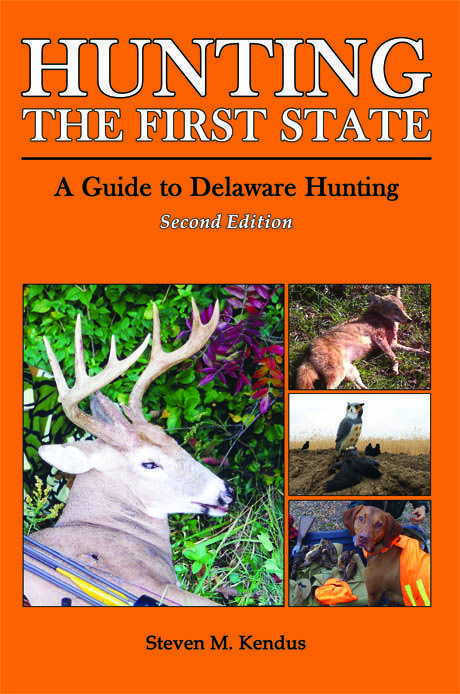
    I know there are a million high-tech camo patterns out there. However, in my opinion, here are the best two patterns on the market. For early season hunting, Predator Spring Green Camo. My hunting buddies and I wear Predator Spring Green from September through early November, and we wear it in the spring for turkeys. Trust me. It is proven. If you look in my book Hunting The First State: A Guide to Delaware Hunting, you will see several photos of us in Predator Spring Screen shirts, fleece pullovers, jackets, and pants. For cold weather hunting, I believe that woolen patterns of King of the Mountain are phenomenal. Bernie Parson is a local reseller who provides create King of the Mountain products.

  • Photorealistic waterfowl, big game, turkey, and predator decoys also deserve honorable mention. Advances over the past ten years have led to more life-like decoys, which led to more successful hunts.
  • Finally, odorless, insect resistant clothing (clothing made from fibers that are impregnated with insect repellent) is a wonderful innovation. Nothing can spoil a hunt quicker than the smell of aerosol bug repellent.

Preserving the Hunting Tradition: Pheasant and Chukar Hunt

January 2nd, 2010

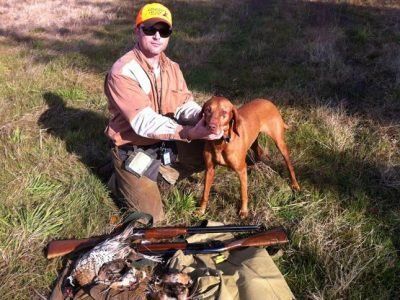
We had a stocked pheasant and chukar hunt yesterday at my gun club.

My vizsla Gus and I had a great time, and we helped several club hunters harvest good numbers of birds.

A.C. Coggins with his first upland bird

A.C. Coggins with his first upland bird

A.C. Coggins. 12, grandson of club member Mike Wheeler, participated in his first upland bird hunt. With mentoring from Wheeler, John Koval, and myself, A.C. successfully harvested a pheasant and several chukars with his new 20-gauge pump.

It’s great seeing older family members passing on the hunting tradition. Across the board, we need to see more of this.

Help for Upcoming Article: What are the Top 10 Hunting Products and Advancements of the Decade?

December 29th, 2009

I am looking for feedback, opinions, and suggestions from hunters, hunting supply store owners, and product  manufacturers regarding the top 10 hunting products and advancements of the 2000s. Article should run January 7, 2010.

Please reply to this post and email your comments to skendus@huntingthefirststate.com. Include your contact info in the email.

Deadline: 10:01pm EASTERN – 04 January

Social Profiles

Follow S. Kendus in Real Time

Facebook
YouTube
Technorati
Twitter
LinkedIn
social profilr
Search